
Every hourly workforce has a different shape.
A security guard's shift is not a retail roster, and a retail roster is not a delivery route. Hirebase adapts to how each industry actually schedules, verifies and pays its field.
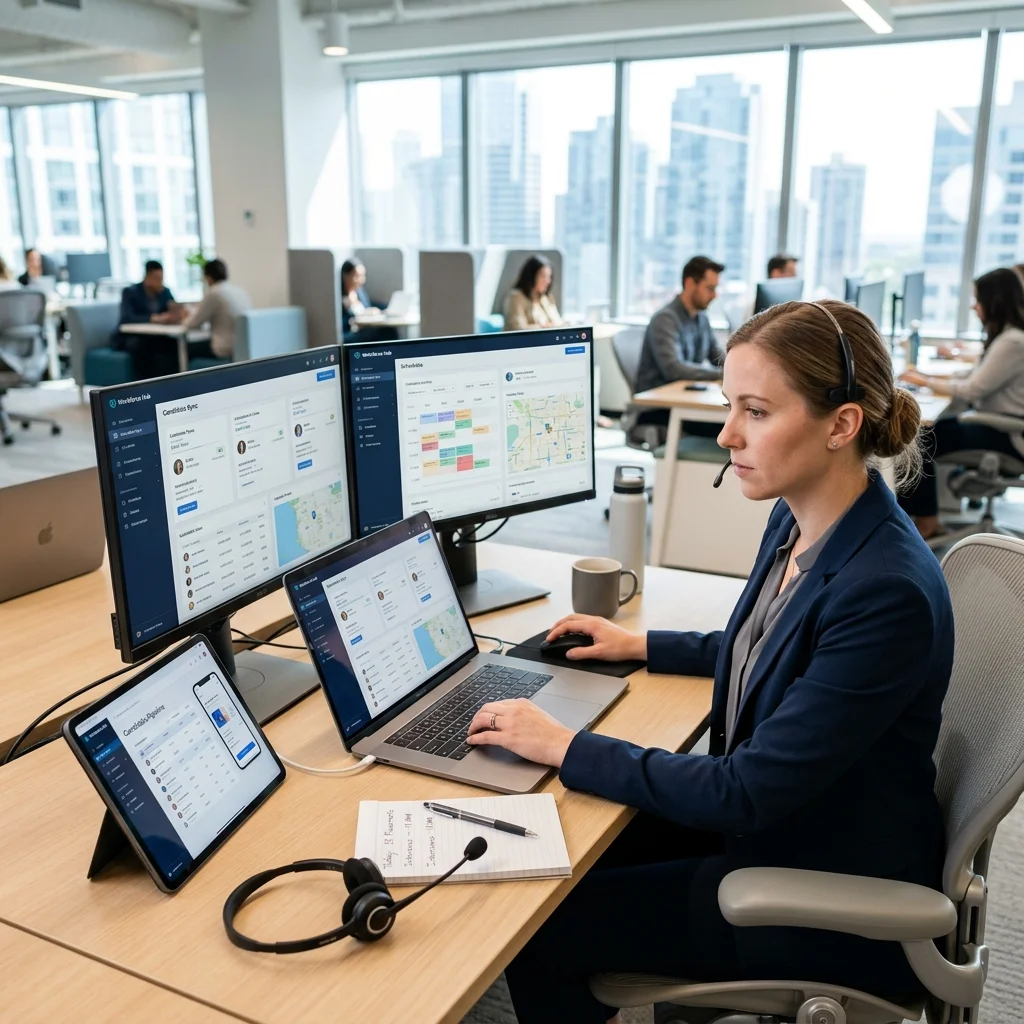
Staffing & Manpower Agencies
Placement, onboarding at scale

Security Agencies
Verified identity on every shift

Retail Operations
Weekly roster turnover

Healthcare Field Staff
Fixed multi-site coverage

Logistics & Delivery
Lone workers, full route

Facility Management
Distributed site coverage
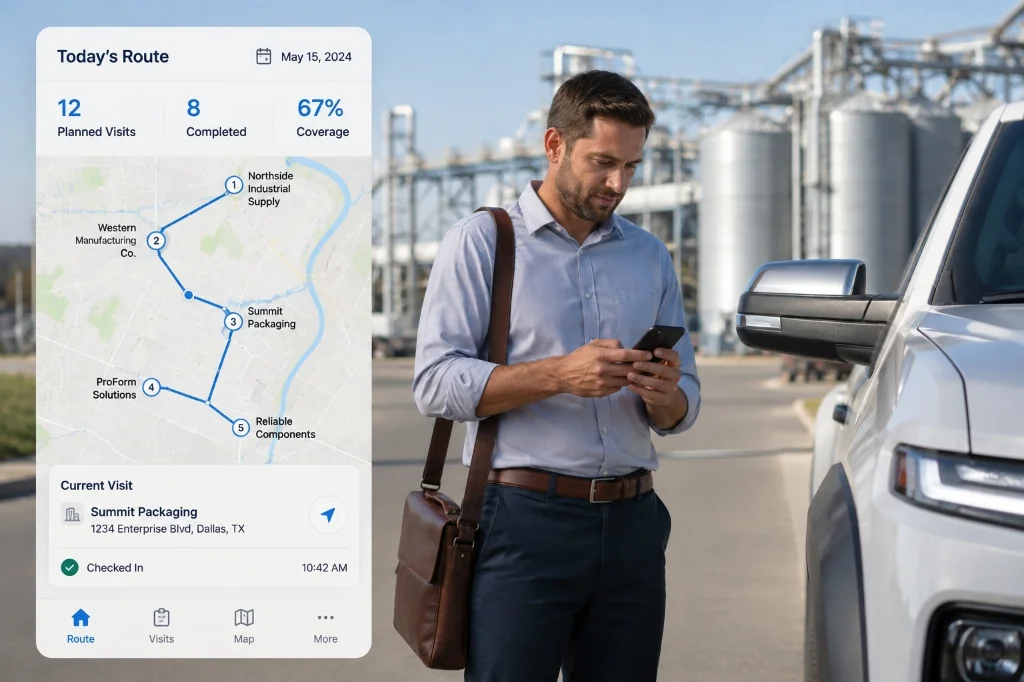
Field Sales
Territory tracking, verified

Maintenance & Service
Location-reconciled service records
Different shifts, the same operational question.
Staffing, security, retail, healthcare, logistics, facility management, field sales and maintenance all run on hourly and field workforces that work away from a desk, out of sight of a supervisor. The operational question in every one of these industries is not what was scheduled, it is what actually happened: who showed up, where, and when. A generic HR suite holds the employment record, name, pay rate, tenure, but it does not run the shift itself. That gap gets filled with spreadsheets, paper sign-in sheets and a handful of point tools that do not talk to each other or to payroll.
Every industry on this page runs the same execution layer underneath: the same configured attendance controls, which can include a geofence check, a live photo, safety questions where the role requires them, the same one worker record from onboarding through exit, and the same scheduling model that stays in draft until a manager explicitly publishes it. What differs is the shape of the shift, the compliance framework a given industry has to satisfy, and what a client expects to see in a report. That is why Hirebase ships a page, and a configuration, per industry rather than one generic workforce page trying to describe all of them at once.
Frontline industry operating models & verification criteria.
Compare how Hirebase maps its verification sequence, failure-mode safeguards, and margin recovery mechanisms across all eight supported frontline sectors.
| Frontline Industry | Primary Verification Need | Operational Failure Mode | Hirebase Architecture & Financial Outcome |
|---|---|---|---|
| Staffing & Manpower Agencies | High-volume bilingual onboarding & hard-gated credential verification before placement | Unbillable ghost shifts and disputed client timesheets with 5–15% invoice revenue withheld | ATS ⇄ Dispatch mode switcher with bilingual LMS video locks and verified gross wage exports 100% dispute-proof client invoicing; instant gross margin preservation |
| Security Agencies | Guaranteed on-post guard presence and mandatory licensing (e.g. BSIS guard card) tracking | Sleeping on post, buddy punching at gate turnstiles, and contractual SLA penalty deductions | Fixed offline tablet kiosks + mobile 3D face liveness and 10m geofenced punch radius Zero post-abandonment fines; unshakeable defense against client SLA penalties |
| Retail Operations | High-turnover weekly roster management, fair-workweek compliance, and meal break tracking | Statutory predictive scheduling labor fines and unmonitored overtime margin creep | Master Project View with 8-status shift lifecycle, auto lunch break tags, and 90s swap dispatch Elimination of meal break compliance penalties; 4–8% overtime cost reduction |
| Healthcare Field Staff | Mandatory clinical credential gating (CPR, RN license) and verified patient visit duration | Uncredentialed caregiver placement leading to state healthcare regulatory sanctions | Hard-gated 12-policy onboarding document repository with automated expiration date locks 100% audit pass rate for state accreditation; zero credential lapse liabilities |
| Logistics & Delivery | Lone worker safety check-ins, transit tracking, and warehouse hub attendance | Unreported road breakdown delays and untracked driver transit hours | Enhanced Punch report with raw GNSS coordinates, distance from hub, and transit minutes Real-time visibility across multi-hub transit; zero unverified driver hours |
| Facility Management | Multi-tenant commercial building access proof and subcontractor 1099 compliance | Subcontractor overbilling, phantom cleaners, and property manager invoice disputes | Subcontractor compliance portal with live photo gates and per-building attendance logs 8–15% subcontractor billing recovery and unshakeable property manager reports |
| Field Sales | Verified physical customer visits and upfront staffing contract margin scoping | Falsified sales call logs and margin erosion from ill-scoped associate billing terms | Route List with Visited Yes/No verification, photos, and staffing contract scoping form 30% increase in verified rep site visits; locked-in gross margin percentages |
| Maintenance & Service | Multi-stop work order execution with location-reconciled arrival and departure timestamps | Customer claims of missed service visits and disputed technician travel time | Service Report with nested multi-job check-ins and Google Maps polyline route maps 100% billing dispute defense with timestamped proof of arrival and departure |
Tailored Enforcement, Shared Core
Whether deploying fixed-gate kiosks for security or polyline GPS route tracking for mobile maintenance, every industry runs on the same unified single-tenant architecture.
Zero Per-Seat Vertical Surcharges
Replace fragmented vertical point solutions with a single platform that includes all field associates, supervisors, and dispatchers under a fixed enterprise license.
Frequently asked questions about industry workforce operations.
Clear operational answers to how Hirebase adapts its shift execution, attendance verification, and compliance models across different frontline sectors.
How does Hirebase adapt its workforce platform to different hourly industries?
Hirebase uses a modular enforcement architecture that configures its verification sequence around each industry's operational model. For example, security operations use fixed offline tablet kiosks with 3D facial liveness at perimeter gates; mobile service technicians use GPS-geofenced smartphone check-ins with multi-stop polyline route maps; and staffing agencies use bilingual onboarding wizards hard-gated by credential verification.
Can a single Hirebase deployment support multiple industry divisions?
Yes. Enterprise organizations operating across diverse sectors—such as a facilities management firm that runs security, custodial, and HVAC maintenance—can manage all divisions within a single dedicated Azure tenant. Each division or job order can be assigned its own shift rules, geofence radius (down to 10 meters), safety questionnaires, and reporting exports without data co-mingling.
How does attendance verification differ between fixed-site and mobile field teams?
Fixed-site teams (such as retail stores, warehouses, and hospital wards) can utilize stationary tablet kiosks operating in offline-first mode with facial biometric verification. Mobile field teams (such as delivery drivers, security patrols, and home health aides) utilize the employee mobile app, which verifies presence via GNSS coordinates against circular jobsite geofences before enabling the punch.
Does Hirebase eliminate industry-specific software per-seat licensing fees?
Yes. Unlike legacy point solutions that charge separate monthly subscriptions for scheduling, time-tracking, LMS, and field route tracking—often ranging from $8 to $20 per worker per month—Hirebase provides the complete workforce execution suite under a single fixed enterprise license with zero per-seat taxes.

Built for the shape
of your workforce.
Tell us which industry you operate in and we will map Hirebase to the way your shifts
actually run.